


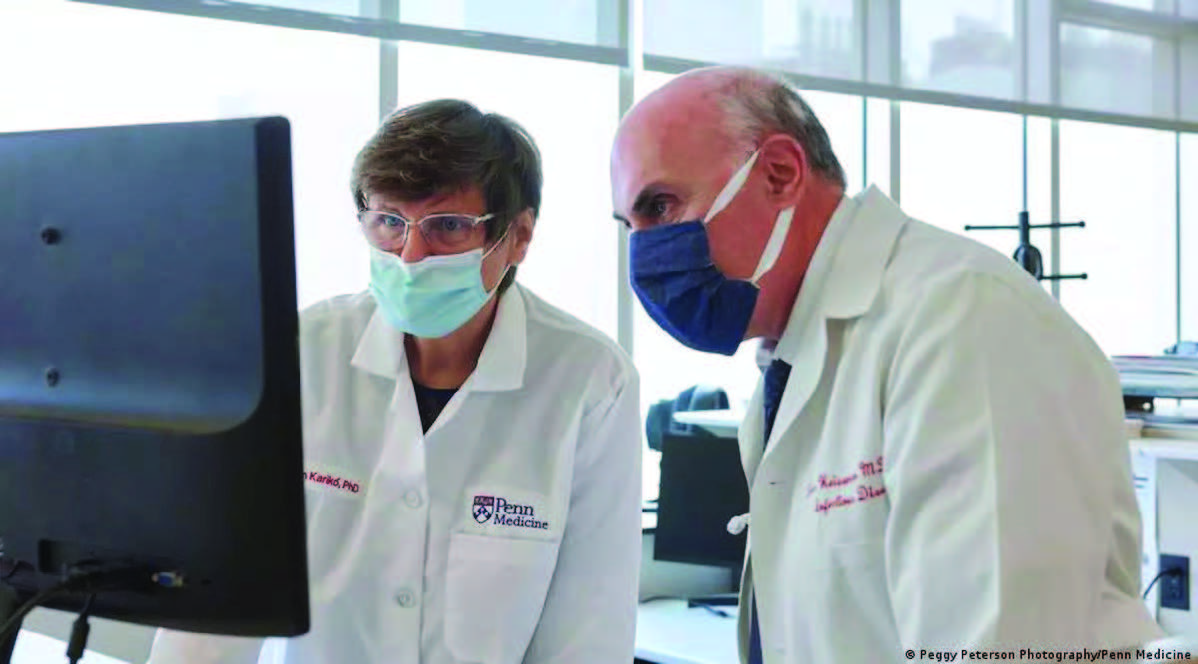
Karikó and Weissman have been working together on mRNA vaccines for more than 20 years.
Photo Source: Peggy Peterson Photography/Penn Medicine
The 2023 Nobel Prize in Physiology or Medicine has been jointly awarded to Dr. Katalin Karikó and Dr. Drew Weissman. Their groundbreaking contributions to mRNA (messenger ribonucleic acid) technology, recognized by this prestigious award, have revolutionized the field of medicine. These discoveries were crucial in the development of effective mRNA vaccines against COVID-19 during the pandemic that started in early 2020. Their findings fundamentally changed our understanding of how mRNA interacts with the immune system, facilitating unprecedented speed in vaccine development during one of the greatest health threats in modern times.
The Nobel Committee specifically honored their discoveries regarding nucleoside base modifications, which were instrumental in creating highly effective mRNA vaccines against COVID-19, marking a significant shift in vaccine development strategies. Katalin Karikó, renowned for her work at the University of Pennsylvania, and Drew Weissman, also from the same institution, were praised for their transformative research that overcame major obstacles in using mRNA as a therapeutic tool. Their innovative techniques in nucleoside base modifications significantly improved mRNA stability and reduced immune responses, unlocking its potential for vaccine applications.
Their impact was especially notable during the COVID-19 pandemic, where mRNA technology played a crucial role in swiftly developing vaccines. The Pfizer-BioNTech and Moderna COVID-19 vaccines, based on Karikó and Weissman’s foundational research, demonstrated exceptional efficacy and became pivotal in global vaccination efforts, significantly aiding in ontrolling the virus’s spread. mRNA vaccines work by triggering the production of proteins that stimulate the formation of virus-blocking antibodies in our cells.
The Nobel Prize acknowledgment not only celebrates the remarkable scientific achievements of Karikó and Weissman but also underscores the broader implications
of their work for public health. The availability of mRNA vaccines not only addressed the COVID-19 crisis but also holds promise for future infectious diseases and medical conditions. This prestigious recognition highlights the vital role of scientific research in driving innovation and improving healthcare outcomes globally. Karikó and Weissman’s legacy will continue to inspire advancements in mRNA technology, paving the way for transformative solutions in medicine and public health.
-Editorial Board
Ankuram Academy


