


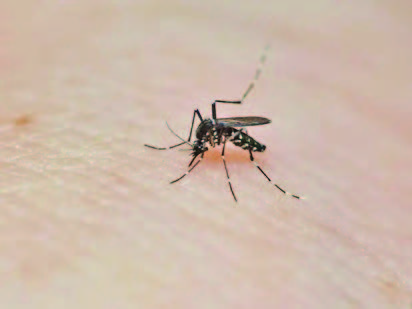
Aedes mosquitoes feed on human blood. They serve as carriers for diseases such as dengue fever and malaria, with dengue fever being particularly prevalent during the rainy season.
Photo Source: [email protected]
Mosquitoes, often overlooked, cause more human deaths than any other animal. Each year, about 725,000 lives are taken by diseases carried by mosquitoes, like malaria and dengue. Out of over 3,200 mosquito species, only around 200 species bite humans. However, this small number causes widespread infection, affecting 247 million people annually. The impact of diseases like malaria, dengue fever, and Zika virus emphasizes the crucial need for fresh approaches to tackle these dangerous pests.
A novel approach to this problem involves the use of Wolbachia, a type of bacteria that infects mosquitoes. Wolbachia-infected mosquitoes are unable to transmit diseases. The bacteria create an unfavorable condition for viruses of dengue to grow in the body of the mosquito, Aedes aegypti, the primary mosquito species responsible for transmitting dengue. Moreover, the bacteria affect the mosquitoes’ reproduction in fascinating ways. If infected males mate with noninfected females, the eggs will not hatch. Conversely, if a non-infected male mates with an infected female, the offspring will be infected and unable to transmit diseases.
In a revolutionary experiment carried out in Yogyakarta, Indonesia, researchers have introduced a biological innovation that offers significant potential in controlling the proliferation of diseases spread by mosquitoes. This trial centered on the release of genetically altered mosquitoes containing the Wolbachia bacterium, which effectively hinders these insects from spreading specific viruses. The results were striking: a substantial decrease of 77% in dengue fever instances within the urban area. These results serve as the most compelling evidence thus far that the Wolbachia method, in development since the 1990s, holds promise in potentially eradicating some of the deadliest mosquito-borne diseases worldwide. This news is featured in the journal Nature (Nature News: doi: https://doi.org/10.1038/d41586-020-02492-1).
In Brazil, a fully automated mosquito factory is releasing one hundred million mosquitoes every week, with a target of releasing five billion mosquitoes by 2025, as part of a comprehensive strategy to combat disease transmission. This initiative utilizes two primary methods of releasing mosquitoes: introducing Wolbachia-infected eggs into water sources to allow them to hatch and mature naturally and dispersing 150 Wolbachia-infected mosquitoes per one hundred meters in target areas. Similar programs have been implemented in other regions, such as Indonesia, where they have led to significant reductions in dengue cases by 77% and hospitalizations due to dengue fever by 86%. While these successes provide hope for combating mosquito-borne diseases globally, it’s crucial to acknowledge mosquitoes’ ecological importance. They serve as pollinators and food for many animals. Their extinction could disrupt ecosystems more than we realize.
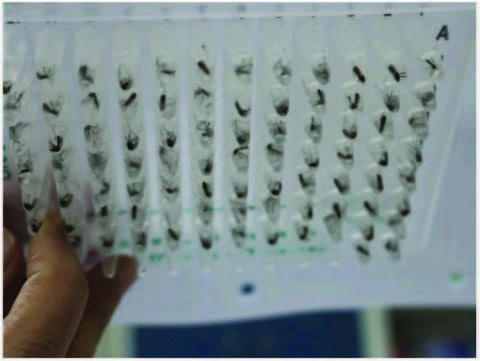
A plate of Wolbachia-infected mosquito, which were released in an
Indonesian city.
Photo Source: World Mosquito Program
The prospect of dengue elimination through innovative mosquito strategies offers a ray of hope for millions worldwide. As we continue to advance in our understanding and implementation of these groundbreaking approaches, let us remain steadfast in our commitment to turning the tide against this debilitating disease. Together, let us pioneer a future where dengue is but a distant memory, and communities thrive free from the burden of this relentless adversary.
– Sajal Sharma
Ankuram Academy (2023)


