Successful implantation – surgery done by Neurosurgery and Cranio-Maxillo-Facial Surgery at the University Hospital Basel.
Photo Source: Video screenshot from unispitalbasel YouTube Channel
In August 2023, a patient at the University Hospital Basel received a custom-made artificial skullcap produced using 3D printing technology. This achievement marks a significant milestone in modern medical technology. The Department of Oral and Maxillofacial Surgery (OMFS) collaborated with the Department of Neurosurgery to implant the skullcap, showcasing years of research and development efforts. The University Hospital Basel becomes the first hospital in Europe to produce in-house 3D-printed implants that meet current Medical Devices Regulations (MDR). The patient, Thomas Wirth (46 years old) in question, who suffered a stroke in 2019, leading to the removal and subsequent reinsertion of part of his skull to alleviate pressure. However, complications arose months later, including skullcap dissolution and symptoms like visual disturbances, severe headaches, and dizziness. Seeking treatment, Wirth turned to the University Hospital Basel’s neurosurgery department led by Prof. Guzman.
Dr. Neha Sharma utilized CT scans of the patient’s skull and imported them into software to design unique 3D-printed cranial implants tailored specifically for him. Subsequently, the hospital’s 3D printing lab fabricated the implants using polyether ether ketone (PEEK) material. PEEK implants, known for their lightweight, resistance to thermal and ionizing radiation, and similarity to human bone structure, are well-suited for creating 3D-printed implants.
Just weeks after the surgery, Thomas Wirth is optimistic about the future. The surgery was a success, and the University Hospital Basel is closely monitoring Wirth, their “pilot patient,” throughout his recovery. For both Wirth and the University Hospital Basel, the surgery marks a significant advancement. “I think it’s great that new ground is being broken here and that the university hospital is creating advantages both technologically and financially,” says Thomas Wirth.
The University Hospital Basel gains substantial advantages from producing implants internally, such as improved team coordination and considerable material cost savings. Encouraged by this achievement, the hospital intends to extend its adoption of 3D printing methods. The future vision encompasses a wide array of applications, from intricate facial reconstructions to spinal implants.
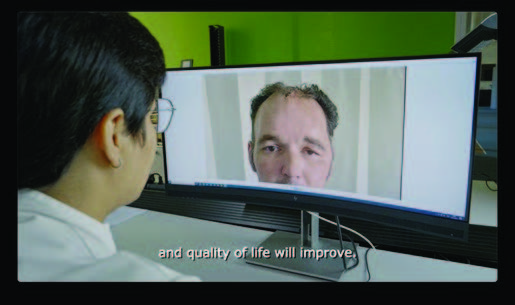
About one week after surgery. The patient has no more symptoms and is very confident about his future.
Photo Source: Video screenshot from unispitalbasel YouTube Channel
-Editorial Board
Ankuram Academy