


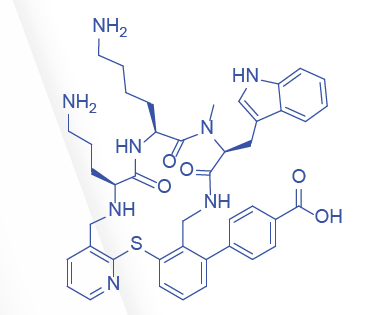
The chemical structure of the Zosurabalpin
Acinetobacter baumannii is a type of bacteria known for its ability to develop resistance to multiple antibiotics, making it challenging to treat, especially in hospital-acquired infections. It can lead to infections, particularly in healthcare settings, among those with weakened immune systems or underlying health conditions. Bradley and collaborators have unveiled a new class of antibiotics known as Zosurabalpin (RG6006), which has shown high effectiveness against the bacterium carbapenem-resistant Acinetobacter baumannii (CRAB). This bacterium, classified as a ‘priority 1’ pathogen by the World Health Organization due to its growing presence in hospitals, poses a significant threat to public health. They published their findings in the journal Nature (Nature 2024, 625,
572–577).
The newly discovered antibiotic, Zosurabalpin, demonstrates remarkable efficacy against CRAB in both laboratory settings and infected animals. In extensive testing, Zosurabalpin proved effective against over 100 CRAB samples collected from infected patients. the research team observed that Zosurabalpin successfully eradicated all bacterial strains tested. Furthermore, in mice infected with CRAB, Zosurabalpin effectively eliminated the bacteria from the bloodstream, thereby preventing the onset of sepsis.
Zosurabalpin functions by inhibiting a molecular machinery known as LptB2FGC, responsible for transporting the lipopolysaccharide toxin from the inner barrier of the bacteria to the outer one. By blocking this process, Zosurabalpin causes the toxin to accumulate within the bacterial cell, leading to the death of CRAB cells. Zosurabalpin is currently undergoing phase 1 clinical trials for treating patients infected with CRAB. This initial testing in humans aims to identify any potential side effects or toxicity associated with the drug. It is crucial for Roche (a multinational healthcare company), the company developing the drug, to ensure that Zosurabalpin is as effective in humans as it was in mice. Additionally, researchers will closely monitor the trial patients to determine if any antibiotic resistance develops over the course of treatment.
– Shikshya Lamsal
Ankuram Academy (2023)


